
Symptoms of Bacterial Infection After colonoscopy
Experiencing Symptoms After a Colonoscopy?
Bouk Law is actively reviewing claims against Olympus for scope infections. Contact us today to speak with an attorney free of charge.
The information below explains common infection signs, when medical care may be needed, and why some patients are looking at tainted scopes as a possible cause of injury.
Bacterial Infection After Colonoscopy
What Are the Signs of Infection After a Colonoscopy?
Most colonoscopies end without a problem, but serious infections can happen. If you became ill after a colonoscopy and were later diagnosed with a bacterial infection, sepsis, or another serious complication, you may have questions about what caused the illness and whether legal options are available.
If you have fever, chills, worse belly pain, diarrhea, nausea, vomiting, or other worrying symptoms after a colonoscopy, get medical help. Most patients recover without problems, but infections linked to tainted or badly reprocessed scopes may show up days or even weeks later. This guide covers the symptoms of bacterial infection after colonoscopy and when to seek care.
The following signs can point to a problem:
- Fever
- Chills
- Worse belly pain
- Ongoing diarrhea
- Nausea or vomiting
- Unusual weakness
- Dizziness
- Bleeding that does not improve
A fever after colonoscopy can happen because the body is reacting to bacteria, swelling, or a tear in the colon wall.
The National Institute of Diabetes and Digestive and Kidney Diseases (NIDDK) says to get help right away if you have severe belly pain, a high fever, bloody bowel movements that keep going, nonstop bleeding, dizziness, or weakness. Call a healthcare professional as soon as you can if these signs appear. (niddk.nih.gov)
Which Symptoms Are Normal After a Colonoscopy?
After a routine colonoscopy, many people feel bloated or crampy for a few hours. That is because the doctor uses air or carbon dioxide to open the colon during the exam.
NIDDK says cramping or bloating can happen during the first hour. Most people can go back to a normal diet the next day if their clinician gives no other instructions. Light rectal bleeding can also be normal if a biopsy or polyp removal was performed. (niddk.nih.gov)
The key difference is the pattern. Normal recovery tends to improve steadily. Normal recovery gets better day by day. Infection symptoms tend to last, get worse, or come with fever, chills, sweating, exhaustion, or a fast heartbeat.
Use this simple comparison as a guide, not a diagnosis:
| More likely normal recovery | More concerning for infection of complication |
| Mild bloating or gas that improves | Worsening or severe abdominal pain |
| Brief cramps after the procedure | Pain with fever, chills, or vomiting |
| Small amount of spotting after biopsy/polyp removal | Bleeding that continues, increases, or fills the toilet |
| Tiredness from sedation or poor sleep | Extreme weakness, confusion, fainting, or clammy skin |
| Temporary loose stool after bowel prep | Ongoing diarrhea with fever, blood, or dehydration |
If you had a biopsy or polyp removed, your recovery instructions may be more specific. Follow them closely, and call the number on your discharge paperwork if your symptoms fall outside what you were told to expect.
When Should I Call a Doctor After a Colonoscopy?
Usually, it’s recommended to contact your colonoscopy team, primary care clinician, or an urgent care service if you experience any of the following:
- Fever of 100.4°F / 38°C or higher
- Chills, shaking, or flu like symptoms after colonoscopy
- Belly pain that is worsening, severe, or not relieved by passing gas
- Persistent diarrhea, especially with fever, blood, or dehydration
- Repeated vomiting or inability to keep fluids down
- Rectal bleeding that is more than light spotting or does not improve
- New weakness, faintness, or dizziness after colonoscopy
- A hard, swollen, or very tender abdomen
- Symptoms that briefly improve and then return worse
Dizziness after colonoscopy can happen from dehydration, bowel prep, sedation, low food intake, or blood loss, but it should not be ignored when it occurs with fever, bleeding, shortness of breath, or marked weakness. Those combinations may signal that your body is under stress and needs medical evaluation.
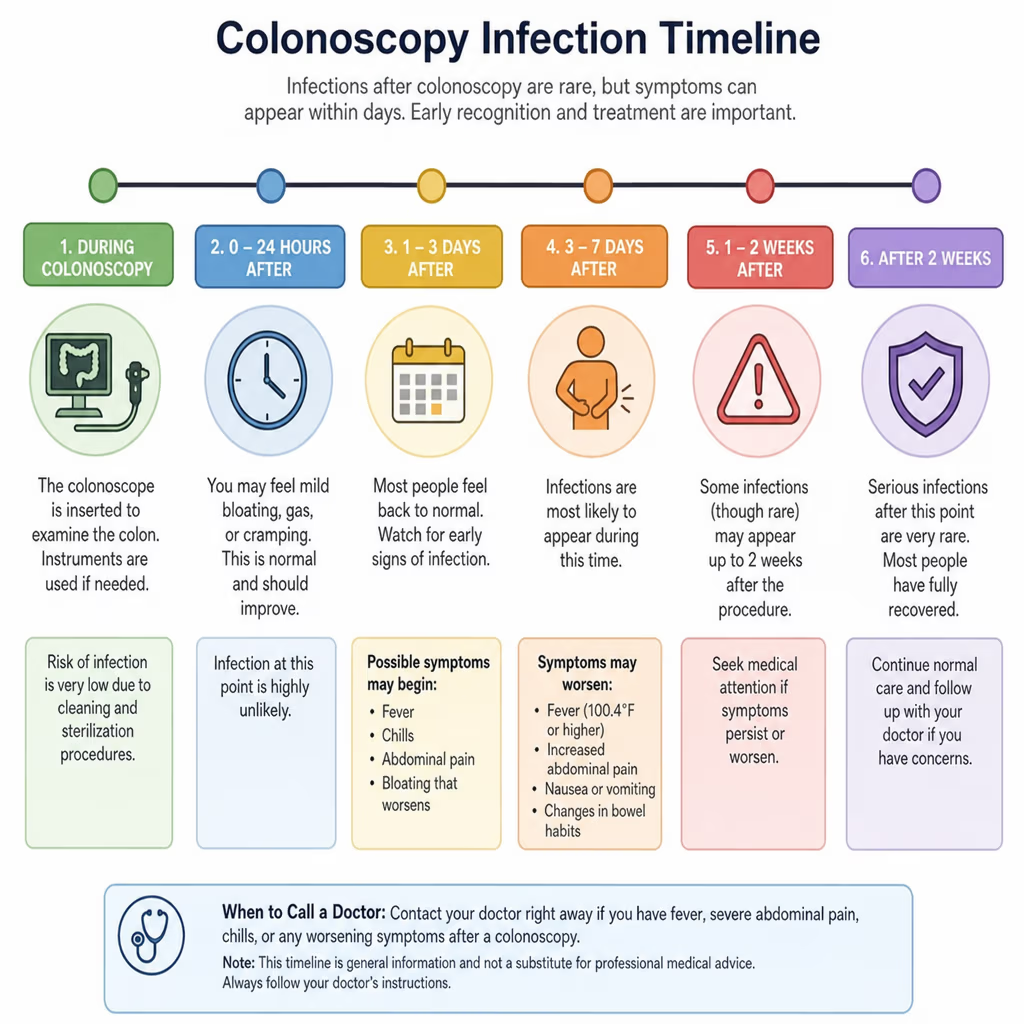
When Can Infection Symptoms Appear After a Colonoscopy?
Infection symptoms may start within hours, over the next few days, or later in recovery, depending on the cause.
One outpatient surgery center study tracked unexpected infection-related visits within 7 days. It found rates of 1.1 per 1,000 screening colonoscopies and 1.6 per 1,000 non-screening colonoscopies. That means infection is uncommon, but it can happen. (pubmed.ncbi.nlm.nih.gov)
Some problems, such as delayed bleeding after polyp removal, can appear days later. NIDDK states that delayed bleeding can occur up to 2 weeks after colonoscopy, especially when polyps are removed. (niddk.nih.gov)
Because timing can vary, do not dismiss symptoms just because they did not start right away. A new fever, growing belly pain, or ongoing diarrhea several days after the procedure is still worth reporting.
What Can Cause a Bacterial Infection After a Colonoscopy?
Many infections linked to an endoscopic procedure are caused by equipment which was not thoroughly cleaned and disinfected between procedures, leading to retained microorganisms on the endoscope.
Bacteria in the Blood
A colonoscopy is a medical procedure that uses a flexible tube, called a scope, that is carefully inserted through the rectum. The scope has a light and a camera, which lets doctors look inside the colon, part of the large intestine. The test is often used to check for issues such as swelling, polyps, or cancer.
If the doctor removes a polyp or takes a biopsy, small breaks in tissue can happen.
That can let bacteria into the blood.
According to the American Society for Gastrointestinal Endoscopy (ASGE), bacteria can enter the bloodstream when the gut lining is damaged during an endoscopic procedure. Serious infection from this is rare. (asge.org)
Dirty Scopes or Equipment
Another possible route is contamination from equipment, which is why reprocessing is so important.
Because gastrointestinal endoscopes are reusable devices, they must undergo a detailed cleaning and disinfection process between patients. If reprocessing is incomplete or performed incorrectly, bacteria and other microorganisms may remain on the device and potentially be transferred during a later procedure.
Some outbreaks of serious infections have been linked to reusable endoscopes, including certain Olympus scopes and other gastrointestinal endoscopy equipment. As a result, healthcare facilities are expected to follow strict cleaning and reprocessing protocols designed to reduce the risk of patient exposure to harmful bacteria.
According to the Centers for Disease Control and Prevention (CDC), gastrointestinal endoscopes should receive at least high-level disinfection and be reprocessed according to the manufacturer’s specific instructions. Key steps may include manual cleaning, high-level disinfection, rinsing, drying, and proper storage before the device is used again.
When these procedures are followed correctly, the risk of infection is significantly reduced. However, failures in cleaning, disinfection, handling, or storage can increase the possibility of bacterial contamination and patient injury. (cdc.gov)
Possible infection-related problems after colonoscopy may include localized inflammation, diverticulitis, peritonitis, abscess, bacteremia, or, in rare cases, sepsis. A perforation, which is a hole in the colon wall, is not the same thing as an infection, but it can allow bacteria to enter areas where they do not belong and can become an emergency.
Tear or Injury to the Colon
Problems linked to infection after colonoscopy may include:
- Local swelling
- Inflammation in colon pouches
- Infection in the belly lining
- Abscess
- Blood infection
- Sepsis, in rare cases
What Are the Signs of Sepsis After a Colonoscopy?
Sepsis is rare, but it is an emergency to recognize. Sepsis is the body’s extreme response to infection. A life-threatening medical emergency.
The CDC says infections that lead to sepsis often start in the digestive tract, lungs, skin, or urinary tract. Fast treatment matters because sepsis can lead to tissue damage, organ failure, and death. (cdc.gov)
Seek emergency care now if symptoms after colonoscopy include:
- Fever or feeling chilly
- Clammy skin
- Confusion
- Severe pain
- Shortness of breath
- A rapid heart rate
- A weak pulse
- Fainting
- Extreme weakness
The CDC lists these as possible signs of sepsis. Treat them as urgent, not as something to watch at home. (cdc.gov)
How Are Colonoscopy Infections Treated?
Possible Evaluation and Treatment
If your healthcare team suspects infection after colonoscopy, they will usually start with your symptoms, vital signs, procedure details, and medical history.
They may ask:
- Whether a biopsy or polyp removal was done
- When symptoms started
- Whether you have passed stool or gas
- Whether bleeding is increasing
Possible evaluation may include:
- Vital signs: temperature, heart rate, blood pressure, oxygen level, and hydration status.
- Blood tests: white blood cell count, kidney function, inflammation markers, and blood cultures if sepsis is a concern.
- Imaging: often a CT scan if severe pain, perforation, abscess, or post-polyp removal syndrome is possible.
- Stool tests: especially if diarrhea is ongoing, bloody, or starts after certain medicines.
- Treatment: oral or IV medicines, fluids, hospital monitoring, drainage of an abscess, or surgery if a serious problem is found.
IV Medicines and Hospital Care
These medicines can help when a bacterial infection is suspected or confirmed by a healthcare professional.
The Centers for Disease Control and Prevention (CDC) says a clinician should lead treatment choices because medicines can cause side effects like nausea, diarrhea, dizziness, and allergic reactions. Some drugs can also lead to C. difficile. Talk with a clinician about the risks and benefits. (cdc.gov)
Could I Have an Olympus Scope Lawsuit Claim?
If you believe you may have been affected, you can also request a free case evaluation using the form on this page. If you would like to learn more about litigation involving contaminated Olympus endoscopes, visit our Olympus Scopes Lawsuit page.
Our legal team can review your medical records and procedure information to help determine whether further investigation is appropriate. Because legal deadlines can vary by state and individual circumstances, it is often beneficial to have your situation reviewed as soon as possible.
Why Choose Bouk Law?
- Accepting Clients Nationwide
- Direct attorney contact
- No recovery, No fee
- Care and urgency
Olympus Colonoscope Bacterial Infections
Frequently Asked Questions
What bacteria have been linked to contaminated endoscopes?
Clostridioides difficile (C. diff), drug-resistant “superbugs” like MRSA, Salmonella, Tuberculosis, Mycobaterium and Serratia, among others.
How do doctors diagnose an infection after colonoscopy?
Doctors look for warning signs like persistent fever, chills, severe or worsening abdominal pain and tenderness, nausea, vomiting, or prolonged rectal bleeding
Can a colonoscopy cause a bloodstream infection?
Yes, mucosal trauma from the procedure can allow normal bacteria from the colon to cross into the bloodstream.
Still feeling sick a week after colonoscopy, could it be an infection?
Yes. A new fever, worse stomach pain, or diarrhea that will not go away after a week should be checked.
Does general ill feeling after colonoscopy indicate infection?
It may. After a colonoscopy, feeling unwell could come from sedation, dehydration, low food intake, an infection, or another issue.
Why am I still having diarrhea after a colonoscopy?
You may have a post-colonoscopy bacterial infection. If diarrhea lasts longer, or you have fever or pain, contact your doctor.
Does a sore throat after colonoscopy indicate infection?
Usually not. A sore throat often comes from irritation in the airways, not from a colon infection. If it is severe or does not go away, talk with your healthcare team. Your healthcare team can confirm whether you have an infection.
Does a fever after colonoscopy indicate infection?
Yes. A fever after a colonoscopy, especially with chills after colonoscopy or belly pain, may indicate you have an infection. Seek medical care from your physician and healthcare team.
Has Clostridioides difficile (C. diff) bacteria been linked to scope contamination?
Yes. Because C. diff forms hardy, protective spores, it is notoriously resistant to standard alcohol rubs and standard liquid chemical germicides if the protocol isn’t perfectly followed. Studies have proven that colonoscopes used on patients with active C. diff frequently test positive for the bacteria immediately post-procedure, making strict mechanical brushing and sporicidal washing mandatory to prevent transmission. [1, 2, 3, 4]
Has Drug-Resistant "Superbugs" (CRE, MRSA, etc.) bacteria been linked to scope contamination?
Yes. Multi-drug resistant organisms (“Superbugs”) are a primary focus of modern scope-contamination investigations. While Carbapenem-Resistant Enterobacteriaceae (CRE) and ESBL-producing E. coli or Klebsiella are the most prominent superbugs linked to GI scopes, MRSA has also been isolated from reprocessed endoscope equipment and staff handling areas, primarily transferred via improper hygiene or surface cross-contamination. [1, 2]
Has Salmonella bacteria been linked to scope contamination?
Yes. If a scope is inadequately disinfected after treating a patient with salmonellosis, the bacteria can easily be transmitted to the next patient. Salmonella species are classic exogenous pathogens linked to endoscopy cross-contamination. [1]
Has Mycobacterium (including Tuberculosis) bacteria been linked to scope contamination?
Yes. They are well-documented culprits in endoscope cross-contamination, often thriving in the water lines of automated endoscope reprocessors (AERs) or surviving suboptimal disinfection times. Mycobacterium tuberculosis and non-tuberculous mycobacteria (NTM) have a waxy cell wall that makes them highly resistant to chemical disinfectants. [1, 2]
Has Serratia bacteria been linked to scope contamination?
Yes. It is frequently implicated in medical device outbreaks when stagnant rinse water or contaminated automated washers allow the bacteria to multiply inside the channels. Serratia marcescens is an opportunistic bacterium known to form resilient biofilms inside the complex, narrow inner channels of endoscopes.